
Blog

  • Top 10 Common Violations of the Texas DTPA You Should Be Aware Of

    Top 10 Common Violations of the Texas DTPA You Should Be Aware Of

    Introduction 

    The Texas Deceptive Trade Practices Act (DTPA) was created to protect consumers from dishonest business practices and to promote fairness in the marketplace. Unfortunately, violations of the DTPA occur frequently, leaving Texas consumers exposed to financial losses, stress, and frustration. In this article, we’ll walk you through the ten most common violations of the DTPA so you can spot the warning signs and take action if needed.

    1. False Advertising: Have you ever seen an ad that seemed too good to be true? Often, businesses promote products or services with misleading claims—whether they’re overstating a product’s benefits, hiding defects, or lying about availability. These kinds of advertisements are a clear violation of the DTPA. If you were lured in by an ad that turned out to be false, you could have grounds for a claim.
    2. Failure to Disclose Known Defects: Texas law requires businesses to be upfront about any known defects before making a sale. Imagine purchasing a car, only to later discover it had significant damage that the seller was aware of but didn’t disclose. This kind of deceit is a clear violation of the Deceptive Trade Practices Act (DTPA). If a defect could significantly affect the product’s value or functionality, sellers are obligated to reveal that information—it’s as straightforward as that.
    3. Misrepresentation of Warranty Terms: Warranties are meant to give consumers peace of mind, but sometimes businesses aren’t upfront about what they actually cover. If a company exaggerates the scope of a warranty or hides important limitations, they’re violating your rights under the DTPA. For example, a business might promise a “full warranty” but bury details that limit what’s actually covered. Clear, honest communication about warranty terms is a legal requirement, and anything less is breaking the law.
    4. Bait-and-Switch Tactics: Have you ever encountered advertisements that promise incredible deals, only to find that the item is mysteriously out of stock when you arrive? This tactic is known as a “bait-and-switch.” It occurs when a business attracts customers with an alluring offer but then attempts to sell them something more expensive instead. It’s a classic deceptive practice and one that the DTPA strictly prohibits. If you’ve experienced this, you have the right to hold that business accountable.
    5. Unlicensed Services: Certain types of work—like electrical, plumbing, or contracting—require a state license to ensure safety and quality. If a business claims to be licensed but isn’t or implies they’re authorized to do work that they’re not qualified for, it’s a clear violation of the DTPA. This kind of misrepresentation not only breaks the law but can also put consumers at serious risk due to shoddy or unsafe work.
    6. Price Gouging: During times of emergency, like hurricanes or other natural disasters, the last thing you need is someone trying to take advantage of you. Price gouging—charging outrageously high prices during emergencies—is illegal under the DTPA. Texas takes this issue very seriously. If you see prices skyrocket on essential items during a crisis, that’s a clear sign of a violation, and you should report it.
    7. Passing Off Goods as Another: Have you ever bought something that seemed like a name brand but later realized it was a knockoff? Misrepresenting the origin or brand of a product is another type of DTPA violation. Whether it’s a counterfeit logo or a misleading label, if a business tries to pass off one product as something it’s not, they’re deceiving consumers and breaking the law.
    8. Failing to Honor Refund Policies: If a company advertises a money-back guarantee or a flexible return policy, they’re legally bound to honor it. But all too often, businesses ignore their own promises. If a company refuses to follow through on its advertised refund policy, they are violating the DTPA. As a consumer, you have every right to demand that a business keeps its word.
    9. Unfair Debt Collection Practices: Debt collection is already stressful, but some businesses use deceptive or abusive practices to pressure consumers. Under the DTPA, unfair debt collection methods—like false threats of legal action, contacting people without permission, or using profane language—are prohibited. If a business misrepresents the amount owed or intimidates you unfairly, that’s a serious violation of your rights.
    10. Using Fine Print to Hide Important Information: We’ve all seen those contracts filled with tiny, nearly unreadable print. Sometimes, businesses use fine print to hide key details—things like extra fees, restrictive terms, or conditions that could make a product much less attractive. If the fine print is used to obscure crucial information that could influence your decision, that’s a deceptive practice and may be a violation of the DTPA. Transparency is not optional—it’s a legal requirement.

    The Impact of DTPA Violations on Consumers

    When businesses violate the DTPA, the effects on consumers can be severe. Financial losses are often just the beginning—many people also experience emotional distress, mistrust, and even a sense of betrayal when they realize they’ve been taken advantage of. By understanding the most common types of DTPA violations, you can protect yourself and make informed decisions about when to take action.

    What Should You Do If You Encounter a DTPA Violation?

    The Texas Deceptive Trade Practices Act is there to protect you. If you think you’ve been a victim of any of the violations mentioned above, your best move is to talk to a lawyer who knows consumer law in Texas. An experienced attorney can look over your situation, help determine if you have a case, and guide you on the right path forward.

    How The Woodlands Law Firm Can Help

    At The Woodlands Law Firm, we take consumer rights seriously. We’ve helped countless Texans navigate the complexities of the Texas Deceptive Trade Practices Act, and we’re here to help you, too. If you think a business has deceived you, we’re ready to provide a free 15-minute consultation to discuss your situation and your options. Our attorneys are committed to getting justice for our clients and making sure dishonest businesses are held accountable.

    We know that standing up to unethical companies can feel intimidating. That’s why we’re here—to provide personalized service, get to the bottom of your unique situation, and create a legal strategy that works for you. Don’t let dishonest practices go unchallenged. Contact us today, and let’s take control together.

    Contact Us Today

    If you believe you’ve been wronged under the Texas Deceptive Trade Practices Act, The Woodlands Law Firmis here to help. Contact us today at 832-626-0116, email us at admin@woodlands.law, or schedule your free 15-Minute consultation with one of our attorneys through our online scheduling tool HERE
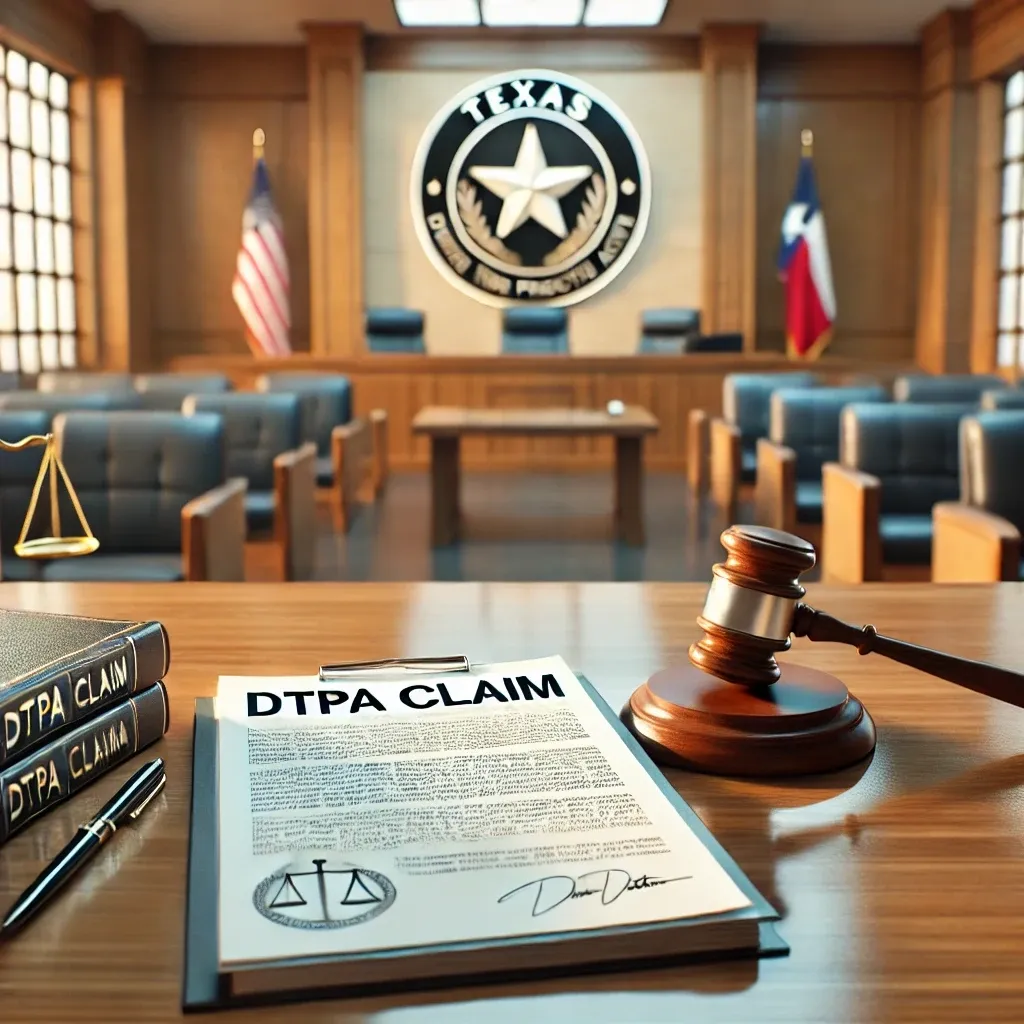

  • What is a DTPA Claim, and How Can It Protect Consumers in Texas?

    What is a DTPA Claim, and How Can It Protect Consumers in Texas?

    The Texas Deceptive Trade Practices Act (DTPA) is a critical piece of consumer protection legislation designed to protect Texas residents from unfair, deceptive, and fraudulent business practices. Enacted in 1973 and regularly updated, the DTPA empowers consumers to file claims against businesses that engage in misleading or unethical conduct in trade, services, or commerce. Understanding the DTPA is essential for Texas consumers who may face deceptive business practices, as it offers a strong legal recourse for recovering damages.

    In this article, we’ll explore what the DTPA entails, how it protects Texas consumers, what qualifies as a DTPA claim, and how The Woodlands Law Firm can help you navigate your rights under this law.

    Overview of the Texas DTPA

    The Texas DTPA is outlined in Chapter 17 of the Texas Business and Commerce Code, often called the “Texas Consumer Protection Act.” The DTPA aims to protect consumers by prohibiting false, misleading, or deceptive acts in the marketplace. These protections apply to both goods and services, covering a broad range of purchases from household items to real estate and professional services.

    Under the DTPA, a “consumer” is defined as someone who seeks or acquires, by purchase or lease, goods or services. Thus, if you fall within this definition and encounter deceptive practices, you may have grounds for a claim.

    What Constitutes a DTPA Claim?

    To successfully bring a DTPA claim, consumers must demonstrate that:

    1. They qualify as consumers under the act.
    2. The defendant committed a prohibited act under the DTPA.
    3. The prohibited act caused economic or personal damages.

    Texas courts have ruled that individuals, partnerships, and corporations may qualify as consumers under the DTPA. However, to succeed, the plaintiff must show they purchased or leased a good or service from the defendant, and that the misrepresentation or deception harmed them in a quantifiable way.

    Consumer Protections Under the DTPA

    The DTPA provides a range of protections that allow consumers to pursue damages for:

    • Economic Losses: Compensation for out-of-pocket expenses resulting from the deceptive trade practice.
    • Mental Anguish: In cases of “knowing” or “intentional” conduct, consumers may recover damages for emotional distress.
    • Exemplary Damages: When a business knowingly violates the DTPA, the consumer can receive up to three times their actual damages, known as “treble damages.”

    Consumers should know that DTPA claims have a two-year statute of limitations from the date of the deceptive act or when the consumer reasonably should have discovered the misconduct.

    Types of Violations Covered

    The DTPA includes a “Laundry List” of over 25 violations that qualify as deceptive trade practices. Some of the most common violations under the DTPA include:

    • False Advertising: Making false claims about a product or service.
    • Unconscionable Actions: Conduct that takes advantage of a consumer’s lack of knowledge or bargaining power.
    • Breach of Warranty: Failing to uphold written or implied guarantees regarding a product or service.
    • Misrepresentation of Goods or Services: Providing misleading information regarding the quality, origin, or characteristics of a good or service.

    The DTPA also extends to certain other areas of consumer protection, like misrepresentations by real estate agents, failure to disclose pertinent facts about a transaction, or deceptive acts by insurance companies.

    Filing a DTPA Claim: Steps and Requirements

    Filing a DTPA claim involves several steps to ensure that the case is well-founded and in compliance with Texas law. Here is an overview of the process:

         Step 1: Send a Demand Letter

    Before filing a lawsuit, the consumer must issue a demand letter to the business, outlining the complaint, the specific DTPA violations,
    and the desired remedy. The business then has 60 days to respond, potentially to settle the claim.

         Step 2: Gather Evidence

    Consumers should collect relevant evidence, including receipts, emails, advertisements, warranties, or other documents that support
    their claim. Documenting phone calls and keeping a timeline of events can also strengthen a case.

         Step 3: File a Lawsuit

    If the business fails to respond or settle, the consumer can proceed with a lawsuit under the DTPA. The consumer can recover economic
    damages, potentially emotional distress damages, and even exemplary damages in severe cases.

         Step 4: Attend Court Proceedings

    Once a lawsuit is filed, both parties will attend court hearings, where the consumer’s legal team presents the evidence and argues the
    case. With the right legal support, consumers can make a compelling case and have a high chance of recovering damages.

    How The Woodlands Law Firm Can Help

    Understanding the Texas DTPA is the first step to protecting your rights as a consumer. If you believe a business has wronged you, The Woodlands Law Firm can help you assess whether you have a valid claim, gather the necessary evidence, and file a compelling case.

    Call Us for a Free 15-Minute Consultation!

    If you’ve been a victim of deceptive business practices, don’t hesitate to reach out for help. The Woodlands Law Firm offers a free initial consultation to discuss your case and explore your options under the Texas DTPA. Call us at 832-626-0116, email admin@woodlands.law, or book online at https://link.woodlands.law/book.

  • Common Insurance Company Tactics and How a Lawyer Can Help

    Common Insurance Company Tactics and How a Lawyer Can Help

    When you’ve been injured in an accident, dealing with insurance companies is inevitable. Whether you’re filing a claim with your own insurance provider or the other party’s, it’s important to understand that insurance companies are businesses. Their primary goal is to protect their profits, often at the expense of paying out full settlements to injured parties. This blog will highlight the common tactics insurance companies use to minimize or deny claims and explain how hiring a lawyer can help you secure a fair settlement.

    Common Insurance Company Tactics

    Insurance adjusters are trained professionals whose job is to save the company money, and they employ a variety of tactics to achieve this goal. Here are some of the most common strategies they use:

    1. Quick Settlement Offers

    One of the first tactics insurers use is offering a quick settlement. After an accident, you might be overwhelmed with medical bills, repair costs, and lost income. To take advantage of this vulnerable time, insurance companies may present a settlement offer that seems fair at first glance but is usually much lower than what your case is actually worth. These offers often come before the full extent of your injuries and future medical costs are known, which can leave you undercompensated in the long run.

    2. Delaying the Claims Process

    Another common tactic is delaying the claims process. Insurance companies know that time is often not on the victim’s side. You may be dealing with financial pressures from medical bills and lost wages, and the insurer may use stalling techniques to make you desperate enough to settle for a lower amount. They might delay communication, ask for unnecessary documents, or stretch out the investigation process to wear you down.

    3. Disputing Liability

    Insurance companies may attempt to place partial or full blame for the accident on you to reduce or deny your claim. Texas follows a “comparative negligence” system, which means that your compensation can be reduced based on your percentage of fault. If you are found to be more than 50% at fault, you may not be entitled to any compensation. Insurers often try to inflate your level of fault to minimize their payout.

    4. Requesting Recorded Statements

    You may be asked to provide a recorded statement soon after the accident, but this is another tactic to be wary of. Adjusters are skilled at asking leading questions that may cause you to inadvertently admit fault or downplay the severity of your injuries. These statements can then be used against you to diminish your claim. It’s always best to avoid giving any recorded statements without first consulting with an attorney.

    5. Denying Medical Treatment

    Some insurance companies will argue that certain treatments are unnecessary or unrelated to the accident. They may question your choice of doctor or claim that your injuries were pre-existing. These tactics are used to deny parts of your medical claim or to reduce the compensation for future treatments you may need.

    6. Surveillance and Social Media Monitoring

    Insurance companies sometimes use surveillance or social media monitoring to catch claimants engaging in activities that may contradict their injury claims. Even innocent posts or photos of you enjoying a social event could be misconstrued as evidence that your injuries are not as severe as you claim. Insurers may also hire private investigators to observe your daily activities.

    7. Lowballing Pain and Suffering Compensation

    While insurance companies are required to cover economic damages like medical bills and lost wages, they often minimize non-economic damages such as pain and suffering, emotional distress, and loss of enjoyment of life. These damages can be difficult to quantify, but they are a critical part of your compensation. Insurers often try to undervalue these aspects to save money.

    How a Lawyer Can Help

    Hiring a personal injury attorney can significantly improve your chances of receiving a fair settlement. Here’s how a lawyer can help counter these insurance company tactics:

    1. Accurately Valuing Your Claim

    A lawyer can assess the full extent of your damages, including both economic and non-economic losses. They will calculate current and future medical expenses, lost income, property damage, and intangible losses like pain and suffering. Without legal representation, you may accept a settlement offer that falls far short of what you’re entitled to.

    2. Handling Communication

    When you have an attorney, all communication with the insurance company goes through them. This eliminates the risk of saying something that could harm your claim. Your lawyer will handle negotiations with the insurance adjuster, ensuring that any settlement discussions are fair and that your rights are protected.

    3. Negotiating a Fair Settlement

    Insurance companies are more likely to offer a reasonable settlement when they know you have legal representation. A skilled attorney knows the tactics insurers use and can push back against lowball offers. If necessary, your lawyer will be prepared to take the case to court to secure the compensation you deserve.

    4. Gathering Evidence

    To counter disputed liability or claims that your injuries are unrelated, a lawyer will gather critical evidence. This may include accident reports, witness statements, medical records, expert opinions, and even accident reconstruction specialists. An attorney’s ability to build a strong case can make it difficult for the insurer to deny or minimize your claim.

    5. Protecting Against Fault Claims

    In Texas, your compensation can be reduced if you’re found partially at fault. A lawyer will help minimize your percentage of fault by gathering evidence and presenting a compelling case that the other party was primarily responsible for the accident. They’ll also make sure that any comparative negligence claims are accurately assessed and don’t unfairly reduce your compensation.

    6. Challenging Delayed or Denied Claims

    If the insurance company is delaying your claim or has denied it outright, a lawyer can take legal action. They will hold the insurance company accountable for any bad-faith practices and file a lawsuit if necessary to get the compensation you deserve.

    7. Managing Deadlines

    Texas law gives you two years from the date of your injury to file a personal injury claim. Missing this statute of limitations means losing your right to compensation. A personal injury attorney will ensure that all necessary paperwork is filed on time and that your case progresses within the legal deadlines.

    Conclusion

    Dealing with insurance companies after an accident can be frustrating and overwhelming, especially when you’re trying to recover from your injuries. Insurance adjusters are skilled at using tactics designed to minimize their payouts, but a personal injury lawyer can protect your interests and ensure you receive the compensation you deserve.

    If you’ve been injured in Texas and are facing challenges with an insurance claim, The Woodlands Law Firm is here to help. Schedule a free 15-minute consultation today by calling 832-626-0116, emailing admin@woodlands.law, or visiting our website to book your appointment: Woodlands.law

  • Common Pitfalls in Business Contracts and How to Avoid Them

    Common Pitfalls in Business Contracts and How to Avoid Them

    Business contracts are essential for establishing clear and enforceable agreements between parties. However, poorly drafted contracts can lead to costly disputes, especially if they include unconscionable clauses, fail to meet the legal requirements of a valid contract, or violate public policy. In Texas, businesses enjoy significant freedom to contract, but there are key legal considerations to keep in mind to avoid common pitfalls. This article will highlight these issues and provide guidance on how to navigate them under Texas law.

    1. Unconscionable Contract Clauses

    Under Texas law, a contract clause may be deemed unconscionable if it is excessively one-sided or oppressive. There are two types of unconscionability: substantive and procedural. To prove that a clause is unconscionable, both types must generally be present:

    • Substantive unconscionability relates to the actual terms of the contract being unfair or overly harsh.
    • Procedural unconscionability refers to the circumstances surrounding the formation of the contract, such as one party lacking a meaningful choice or being pressured into signing.

    To avoid unconscionable clauses, ensure that both parties have a clear understanding of the terms and that those terms are fair and balanced. One-sided clauses that heavily favor one party, such as extreme limitation-of-liability provisions or excessively high penalties for breach, could be ruled unenforceable in court.

    Avoidance Tip: Ensure that the contract reflects a mutual agreement between the parties, taking into consideration the general commercial background and the specific needs of the business. Transparent negotiations and the absence of overreaching or sharp practices can help prevent a finding of unconscionability.

    2. Freedom to Contract

    Texas law provides significant freedom to contract, especially for sophisticated parties negotiating at arm’s length. Courts generally uphold contracts between knowledgeable business entities, even if one party feels the terms are unfavorable after the fact. However, this freedom is not absolute, and contracts must still meet the legal requirements for validity.

    Avoidance Tip: When drafting contracts, ensure that both parties understand the terms and have competent legal representation during negotiations. This helps ensure that any ambiguities are clarified upfront and that the terms are properly documented.

    3. Requirements for a Valid Contract

    In Texas, a contract is only enforceable if certain elements are present:

    • Offer and acceptance: One party makes an offer, and the other party accepts it in strict compliance with the terms.
    • Meeting of the minds: Both parties must agree on the essential terms of the contract.
    • Consent: Both parties must willingly consent to the contract terms.
    • Execution and delivery: The contract must be executed (signed) and delivered with the intent to be mutual and binding.
    • Consideration: There must be an exchange of value or promises.

    Without these essential elements, a contract may be ruled invalid. For instance, if there’s no clear mutual agreement or if one party was coerced into signing, the contract might be unenforceable.

    Avoidance Tip: Review contracts carefully to ensure all essential elements are present. The absence of any one of these elements can render the contract void or unenforceable. This is especially important for businesses, as even small oversights can lead to significant legal and financial consequences.

    4. Public Policy and Contract Enforcement

    While Texas courts generally enforce contracts, they will not enforce agreements that violate public policy or positive law. For example, contracts that conflict with statutory regulations or agreements that are deemed harmful to the public interest may be struck down.

    Avoidance Tip: Ensure that the contract complies with relevant regulatory statutes and does not conflict with public policy. Businesses should seek legal advice when dealing with highly regulated industries, such as insurance, to ensure their agreements do not violate statutory provisions or public policy principles.

    Conclusion

    To avoid common pitfalls in business contracts under Texas law, it’s crucial to ensure that contracts are:

    1. Fair and balanced, without unconscionable clauses;
    2. Legally valid, with all essential elements present;
    3. In compliance with public policy, ensuring enforceability.

    Businesses operating in Texas can protect themselves from contractual disputes by engaging knowledgeable legal counsel during the drafting and negotiation stages. A well-drafted contract can provide clarity and protect the interests of all parties involved.

    If you need assistance with contract drafting, review, or negotiation, contact The Woodlands Law Firm at 832-626-0116, via email at admin@woodlands.law, or schedule a Free 15-minute consultation at our website at https://woodlandslaw.cliogrow.com/book. We’re here to help you safeguard your business with sound legal agreements.

  • Estate Planning in Texas – Benefits and Key Considerations

    Estate Planning in Texas – Benefits and Key Considerations

    Estate planning is an essential step for ensuring the smooth transfer of assets, taking care of loved ones, and minimizing taxes. In Texas, some unique advantages and considerations make estate planning especially beneficial. One of the significant benefits is the option for independent administration of estates, which simplifies the probate process and reduces its associated costs. Furthermore, the issue of probate avoidance is often less critical in Texas due to the state’s accommodating probate laws. Finally, maintaining sufficient liquidity within an estate is an essential factor to consider for efficient estate administration. This article will explore these aspects in detail and explain how they benefit Texas residents.

    Independent Administration of Estates in Texas

    One of the most notable advantages of estate planning in Texas is the availability of independent administration. In Texas, the probate process can be much less burdensome than in other states due to the “independent administration” option. Under this provision, estates can be administered with minimal court oversight, limiting court involvement to only specific actions mandated by the Texas Probate Code. This independence makes the process quicker and more cost-effective for beneficiaries.
    • Reduced Court Supervision: Independent administration means that the executor (or independent administrator) has the freedom to manage and settle the estate without requiring frequent court approval. This often leads to faster distribution of assets and fewer legal fees, providing a streamlined process for beneficiaries.
    • Flexibility and Control: The independent administrator has the power to handle various tasks such as paying off debts, collecting and distributing assets, and selling estate property without seeking court approval for every decision. This can reduce the delays that are typically associated with probate.
    It is important to note that independent administration is not automatically granted. It must either be explicitly requested in a will or agreed upon by the beneficiaries of the estate. An estate planning attorney can help ensure that your will contains the necessary language to take advantage of this process.

    Is Probate Avoidance Necessary in Texas?

    In many states, one of the primary goals of estate planning is to avoid probate entirely due to the time, expense, and complexity involved. However, Texas is an exception. The state’s probate laws are relatively efficient and, when independent administration is utilized, probate can often be a straightforward process.
    • Efficient Probate Process: Given the streamlined nature of independent administration in Texas, the downsides commonly associated with probate – such as lengthy court proceedings and high costs – are significantly reduced. As a result, probate avoidance is not as pressing a concern in Texas as it is in other jurisdictions.
    • Consider Alternatives Carefully: While living trusts and other probate-avoidance tools can still be valuable in certain cases, they are not always necessary for Texas residents. It is important to consult with a knowledgeable estate planning attorney to determine whether setting up these tools will provide benefits that justify their costs and effort.

    Ensuring Sufficient Liquidity in the Estate

    Liquidity is another crucial consideration when planning an estate. Simply put, liquidity refers to the availability of cash or assets that can be easily converted to cash. It is important to ensure that an estate has enough liquid assets to cover any expenses, taxes, or debts that may arise upon a person’s passing.
    • Paying Debts and Taxes: After someone dies, their estate is responsible for settling any outstanding debts, taxes, and other obligations. If the estate is mostly composed of non-liquid assets (such as real estate or business interests), it may be difficult to cover these expenses without selling off valuable assets, sometimes at a loss.
    • Avoiding Forced Sales: If an estate does not have sufficient liquidity, the executor may be forced to sell assets quickly and potentially at unfavorable prices. To avoid this scenario, it is wise to include life insurance policies, cash savings, or other liquid assets in your estate plan.
    • Planning with an Attorney: An experienced Texas estate planning attorney can help evaluate your asset structure and ensure that your estate will have enough liquidity to meet any financial obligations that may arise, thereby preserving the value of your estate for your heirs.

    Conclusion

    Estate planning in Texas offers unique benefits and considerations that can greatly aid in the efficient transfer and protection of assets. The option for independent administration reduces court involvement and streamlines the probate process. In contrast to many other states, probate avoidance is often less critical due to Texas’s efficient probate process. Furthermore, ensuring the estate has enough liquidity to cover its financial obligations is vital for the smooth administration of assets and avoiding forced sales.
    If you need assistance with estate planning or wish to discuss how to best structure your estate, please contact The Woodlands Law Firm. We can provide personalized guidance to ensure that your estate plan aligns with your needs and takes full advantage of Texas’s laws.
    Contact us today at (832) 626-0116, email us at admin@woodlands.law, or visit our website to schedule a free 15-minute consultation at: https://woodlandslaw.cliogrow.com/book.
  • Trusts and Wills in the Texas Probate Process

    Trusts and Wills in the Texas Probate Process

    Understanding the Key Differences

    When planning your estate, the decision between creating a will or trust is significant. Each tool serves a unique purpose in Texas estate planning, with important implications for how your assets are distributed and handled after your death. In this blog, we’ll explore the differences between a trust and a will in the context of the Texas probate process and explain how each can be used effectively to meet your estate planning goals.

    What Is a Will?

    A will is a legal document that outlines how your assets should be distributed upon your death. In Texas, it must be in writing, signed by the testator (the person making the will), and witnessed by at least two people who are over the age of 14. If you pass away without a valid will, your estate will be distributed according to Texas intestate succession laws, which may not align with your personal wishes.

    Benefits of a Will

    1. Simplicity: A will is easier and less expensive to create than a trust. Many people find it to be a straightforward way to ensure that their assets are distributed according to their wishes.
    2. Flexibility: Wills can be amended or revoked at any time during your lifetime, giving you the freedom to adjust your estate plan as your circumstances change.
    3. Appointment of Guardianship: One of the key advantages of a will is that it allows you to name a guardian for minor children, which a trust does not address.

    The Probate Process for a Will in Texas

    When you pass away with a will, your estate typically goes through probate, a legal process where the court validates your will, oversees the payment of debts, and ensures that assets are distributed according to your instructions. In Texas, probate is often less costly and quicker than in other states, but it can still take several months and involves court supervision. The probate process for a will includes:

    • Filing the will: The executor must file the will with the probate court within four years of the decedent’s death.
    • Validating the will: The court will review the will to ensure it meets all legal requirements and will hold a hearing to empower the executor.
    • Managing debts and taxes: The executor will settle any outstanding debts and taxes before distributing the remaining assets to the beneficiaries.

    What Is a Trust?

    A trust is a legal arrangement where one party (the trustee) holds and manages property for the benefit of another party (the beneficiary). In Texas, a trust is not considered a separate legal entity; instead, it is a fiduciary relationship between the trustee and the beneficiaries. There are several types of trusts. One of the most common types of trusts is a revocable living trust, which allows you to maintain control over your assets during your lifetime and set forth instructions on how they should be distributed after your death. Unlike a will, a trust can help your estate avoid the probate process.

    Benefits of a Trust

    1. Avoiding Probate: One of the most significant advantages of a trust is that it allows your estate to bypass the probate process entirely. This can save time and money and help your beneficiaries receive their inheritances more quickly.
    2. Privacy: Unlike a will, which becomes a matter of public record during probate, a trust remains private. This can be beneficial if you prefer to keep the details of your estate confidential.
    3. Incapacity Planning: A trust can provide ongoing financial management if you become incapacitated. A successor trustee can step in to manage your assets without the need for court intervention, unlike a will which only takes effect after death.
    4. Flexible Asset Distribution: Trusts offer more control over how and when your assets are distributed. For example, you can specify conditions that must be met before beneficiaries receive their inheritance, such as reaching a certain age.

    How Trusts Avoid the Texas Probate Process

    When you establish a revocable living trust, you transfer ownership of your assets into the trust during your lifetime. Upon your death, the successor trustee you appointed manages and distributes the assets according to the terms set forth in the trust agreement, without needing court involvement. This process typically includes:

    • Managing assets: The trustee manages the trust’s assets after your death, paying any outstanding debts or taxes.
    • Distributing assets: The trustee distributes the assets to the beneficiaries as specified in the trust document, often quickly and privately, avoiding probate delays.

    Key Differences Between a Trust and a Will in Texas Probate

    1. Probate Process: The most significant difference between a trust and a will is how they are treated in probate. A will must go through probate, while assets held in a trust typically bypass probate, allowing for a more streamlined and private distribution.
    2. Privacy: Wills are subject to public record once filed in probate court, whereas trusts generally remain private, keeping the details of your estate confidential.
    3. Control During Life: With a will, your assets remain in your control during your lifetime, but with a revocable trust, you can manage the assets in the trust during your lifetime and designate a successor trustee to manage them if you become incapacitated.
    4. Cost and Complexity: Trusts can be more expensive and complex to set up initially due to the need to transfer ownership of assets into the trust and more detailed planning. Wills are generally simpler and less costly but may incur probate expenses later.
    5. Guardianship of Minor Children: Only a will can designate a guardian for minor children, which is an essential consideration for parents.

    Should You Choose a Trust or a Will?

    Deciding between a trust and a will depends on your specific circumstances and estate planning goals. For many Texans, a will may be sufficient if they have a relatively simple estate and do not mind going through the probate process. However, if privacy, avoiding probate, or providing for ongoing management of assets is a priority, a trust may be the better option.

    Conclusion

    Both wills and trusts are essential tools in Texas estate planning, each offering unique advantages and protections. Understanding their differences is crucial for making informed decisions about your estate. Consulting with an experienced estate planning attorney in Texas can help ensure that your wishes are honored, your loved ones are protected, and your estate plan is tailored to your individual needs. For free resources, see Texas Law Help.

  • How to Hire a Reputable Contractor in Texas

    How to Hire a Reputable Contractor in Texas

    When it comes to home improvement or construction projects, finding the right contractor is essential. A reputable contractor can turn your vision into reality, while the wrong one can lead to delays, legal disputes, and additional expenses. Texas, with its booming real estate market, offers a wide selection of contractors, making it crucial to know how to choose the best. Here’s a guide to help you hire a reputable contractor in Texas.

    1. Do Your Research

    Start by gathering names of potential contractors through referrals from friends, family, or online reviews. Websites like YelpAngi, and the Better Business Bureau (BBB) can provide valuable insights into the reputation of contractors in your area. In Texas, contractors do not need a general license to operate, but specialty contractors (like electricians and plumbers) do. Always verify the credentials of contractors who require specific licensing.

    • Tip: Look for contractors with strong online ratings and read through both positive and negative reviews. A reputable contractor will have a pattern of satisfied customers and a history of handling complaints professionally.

    2. Check Licensing and Insurance

    For general contractors in Texas, a license is not mandatory. However, contractors working on specialized tasks (e.g., HVAC, plumbing, or electrical) must be licensed by the state. You can verify licensing through the Texas Department of Licensing and Regulation (TDLR) website.

    Additionally, always ask for proof of insurance. A reputable contractor should carry general liability insurance and workers’ compensation. This protects you from potential legal and financial risks in case of an accident or property damage during the project.

    • Tip: Never hire a contractor without proper insurance, as you could be held liable for any injuries or damages that occur on your property.

    3. Ask for References

    Once you’ve narrowed down your options, request references from the contractor. Speak to previous clients to learn about their experiences. Ask about the quality of work, timeliness, communication, and how the contractor handled any challenges.

    If possible, visit completed projects to see the quality of the work firsthand. Reputable contractors will be proud of their work and happy to share references.

    4. Review Contracts Thoroughly

    Before signing any agreement, make sure the contract is detailed and includes the project scope, timeline, materials to be used, payment schedule, and warranties. A reputable contractor will provide a clear, written contract to avoid misunderstandings.

    • Tip: Be cautious of contractors who ask for a large upfront payment or prefer      cash payments. Reputable contractors will usually ask for a small deposit (10-20% of the total project cost) and establish a payment schedule tied to project milestones.

    5. Avoid “Too Good to Be True” Deals

    If a contractor’s bid is significantly lower than others, it’s a red flag. This could indicate they might cut corners, use subpar materials, or are desperate for work. It’s essential to compare estimates from multiple contractors, ensuring that you understand what is included in each bid.

    • Tip: Opt for value over the lowest price. A reputable contractor might charge      more but will likely save you money in the long run by avoiding costly mistakes and delivering quality work.

    6. Verify Permits and Inspections

    Many construction and renovation projects in Texas require permits. A reputable contractor will know the local regulations and will obtain the necessary permits for the job. If a contractor asks you to pull the permits yourself, this could be a sign they are not licensed or trying to cut corners. Locally, if you are subject to any of these jurisdictions, permits may be obtained from The Woodlands TownshipConroe Permits DepartmentMontgomery County Permit Department, and Harris County Permits.

    Additionally, inspections are often required during different phases of the project to ensure code compliance. Ensure that your contractor follows through on all required inspections before completing the project.

    7. Stay Involved in the Project

    While hiring a reputable contractor will give you peace of mind, it’s still important to stay involved throughout the project. Regularly check on progress, ask questions, and maintain open communication with your contractor. This helps prevent misunderstandings and ensures the project stays on track.

    • Tip:  Establish a clear communication plan from the beginning, including how  often you expect updates and the preferred method of contact.

    8. Trust Your Instincts

    Finally, trust your instincts. If something feels off about a contractor, do not enter into a contract with them. Your home is a significant investment, and you deserve to work with someone you trust.

    Conclusion

    Hiring a reputable contractor in Texas may take some time, but it’s worth the effort. Researching, verifying credentials, reviewing contracts, and staying involved—can help protect yourself from potential issues and ensure your project is completed to your satisfaction. Remember, a reputable contractor will prioritize your needs, maintain clear communication, and deliver quality work that stands the test of time.

  • Understanding Your Rights Under Texas’ Deceptive Trade Practices Act (DTPA)

    Understanding Your Rights Under Texas’ Deceptive Trade Practices Act (DTPA)

    What You Need to Know About the DTPA’s Treble Damages 

    Consumers in Texas are protected by one of the strongest consumer protection laws in the country: the Texas Deceptive Trade Practices Act (DTPA). This law was enacted to shield consumers from false, misleading, and deceptive business practices, unconscionable actions, and breaches of warranty. If you’re a Texas resident, understanding your rights under the DTPA is crucial for ensuring that businesses treat you fairly and honestly.

    What is the Texas Deceptive Trade Practices Act (DTPA)?

    The Texas Deceptive Trade Practices Act, found in Chapter 17 of the Texas Business and Commerce Code, is designed to protect consumers from a wide range of dishonest practices. It applies to any transaction involving goods or services, including sales, leases, and other forms of commerce. The DTPA covers many unfair or deceptive practices, such as:

    • False Advertising: making false or misleading statements about a product or service.
    • Bait-and-Switch Tactics: advertising a product at a low price to lure customers, only to push a more expensive item.
    • Unconscionable Actions: taking advantage of a consumer’s lack of knowledge, ability, or experience to a grossly unfair degree.
    • Breaches of Warranty: failing to honor written or implied warranties on products or services.

    Under the DTPA, after consumers have provided proper notice to the seller or lessor of goods and services, consumers have the right to file a lawsuit if they have been harmed by any of these deceptive practices. Importantly, the DTPA not only allows consumers to recover economic damages but also, in some cases, “treble damages.”

    What Are Treble Damages?

    Treble damages are a form of punitive damages intended to deter wrongdoing. Under the DTPA, a fact-finder may award treble damages, which means that a consumer can receive up to three times the amount of their actual economic damages. However, treble damages are not automatically granted; they are only awarded under specific circumstances.

    When Can You Claim Treble Damages?

    To qualify for treble damages under the DTPA, a consumer must prove that the defendant acted “knowingly” or “intentionally.” Here’s what these terms mean:

    • Knowingly: The business was aware that its conduct was false, misleading, or deceptive, but continued with the deceptive practice regardless. If the fact-finder finds that the defendant acted knowingly, it may award up to three times the amount of economic damages plus compensation for mental anguish.
    • Intentionally: The business had the specific intent to deceive or mislead the consumer. If the defendant’s actions are found to be intentional, the court may award three times the amount of both economic damages and damages for mental anguish.

    For example, if a consumer was misled into purchasing a defective car based on false statements by the dealership, and the dealership knowingly provided false information, the court could award treble damages.

    The Texas Supreme Court has held that “[a] DTPA claim does not require that the consumer prove the [defendant] acted knowingly or intentionally. The DTPA requires that the consumer show that the misrepresentation was false and that the false misrepresentation was the producing cause of the consumer’s damages. A consumer is not required to prove intent to make a misrepresentation to recover under the DTPA.” Miller v. Keyser, 90 S.W.3d 712, 716 (Tex. 2002).  Thus, even statements that the speaker did not know were false may support a DTPA lawsuit.

    It is important to obtain a knowledgeable attorney, as many practitioners who do not specialize in this area tend to confuse “proximate” with “producing” cause.  Producing cause is a much lower standard than proximate cause, making a DTPA case easier to prove as a matter of law.

    Additionally, DTPA claims are ‘extra-contractual’ meaning that it does not matter if there is a contract. This tends to cause confusion for unfamiliar practitioners as to whether or not a DTPA claim can be waived under the terms or regular disclaimers in contracts. As stated by the statute itself, unless both parties are represented by lawyers in the drafting of the original contract, the DTPA can not be waived! Even then, the disclaimer must meet additional qualifications to be valid. Therefore, a contract does not typically prevent a DTPA claim.

    Example of Calculation Under the DTPA with Treble Damages:

    The DTPA statute sets out a maximum cap on damages. The maximum under the statutory cap would be calculated as follows:

    Economic Damages

    + Mental Anguish Damages (Calculated at 3x Economic Damages)

    + Multiplier (3x Economic Damages + 3x Mental Anguish Damages)

    + Attorney’s Fees and Court Costs.

    = Total Award

    For example, say that a consumer, Miss Doe, books a beautiful out-of-town wedding venue, represented to her in photographs and by the business owner to be in pristine condition, costing a total of $10,000 for her much anticipated wedding. Unfortunately for her, she arrives on the day of her wedding to find the venue is nothing as it appears in photographs; it is graffitied, defaced, and smells of sewage, making it impossible to have the event she had planned. Despite her heartbreak, the vendor refuses to refund her money.  At trial, the fact-finder awards the maximum damages using the aforementioned calculation. (For simplicity sake, we will only include the original $10,000 economic damage of the venue cost and not additional costs that would be included for moving the venue.) This could result in a total award of:

    $10,000 economic damages

    + $30,000 mental anguish damages (3x $10,000 economic damages)

    + $120,000 multiplier (3x $10,000 economic damages) + (3x $30,000 mental anguish damages)

    + $64,000 (40% attorney contingency fee, if this fee arrangement is chosen)

    + $1,000+ (court costs and fees)

    = $225,000+ total award

    Businesses are shocked to learn that a $10,000 mistake can result in such damages. It is much better to address a consumer’s DTPA claims within the first 60 days of the notice period than to allow these matters to go to trial with such exposure. However, these statutory damage awards are evidence of how seriously the Texas Legislature takes these types of deceptive trade practice injuries to consumers.

    How to File a Claim Under the DTPA

    If you believe you’ve been a victim of deceptive trade practices, you can file a claim under the DTPA. The process typically involves:

    1. Sending a Demand Letter: Before filing a lawsuit, the consumer must send a written demand to the business, outlining the complaint and the damages sought. The business has 60 days to respond and potentially settle the matter.
    2. Filing a Lawsuit: If the issue is not resolved, the consumer can then file a lawsuit in court. The case will be decided based on the evidence provided by both parties.
    3. Proving Your Case: To succeed, the consumer must show that the business engaged in a deceptive practice, that they suffered economic damages, and, if seeking treble damages, that the business acted knowingly or intentionally, which can be inferred by circumstantial evidence.

    Protecting Your Rights

    The DTPA is a powerful tool for consumers, but navigating the legal process can be complex. The Texas Deceptive Trade Practices Act provides protections for consumers, holding businesses accountable for deceptive and unfair practices. If you suspect you’ve been a victim of a deceptive trade practice, take action promptly to ensure your rights are upheld. Give us a call today to see how we can assist you.

  • Starting a Small Business in Texas: Legal Tips and Insights

    Starting a Small Business in Texas: Legal Tips and Insights

    Starting a small business is an exciting journey, but it’s essential to ensure that your legal bases are covered to set yourself up for success. As Texas attorneys, we often guide clients through the nuances of business formation, regulatory compliance, and risk management. Here are some fundamental aspects you should consider when planning to launch your small business in Texas.

    1. Choosing the Right Business Entity

    The type of business entity you choose has significant legal and tax implications. In Texas, the most common types are sole proprietorship, partnership, limited liability company (LLC), and corporation. Here’s a brief overview:

    • Sole Proprietorship: Sometimes call a “dba” or “doing business as,” this is the simplest form, but it offers no personal liability protection.
    • Partnership: This involves two or more people. You can choose from general partnerships, limited partnerships, and limited liability partnerships, each providing varying degrees of liability protection and involvement.
    • Limited Liability Company (LLC): Combines the liability protection of a corporation with the tax efficiencies and operational flexibility of a partnership.  In Texas, LLCs are subject to a franchise tax for income over a threshold.
    • Corporation: This entity provides the strongest protection from personal liability but is more complex and expensive to manage.

    2. Pros and Cons of an S Corporation Designation

    A common myth is that an S Corporation is an entity type. However, an S Corporation is not a type of business entity but rather a tax designation status that can be elected by LLCs or corporations. It allows profits, and some losses, to be passed directly to owners’ personal income without ever being subject to corporate tax rates. However, not all businesses qualify for S Corp status.

    Pros:

    • Tax Savings: Only the dividends paid to the shareholders are taxed at the lower tax rate, not the entire business income.
    • Business Credibility: Being an S Corp may help a business appear more credible to investors and lenders.

    Cons:

    • Strict Qualifications: There are limits on the number of shareholders, and all shareholders must be U.S. citizens or residents.
    • Stock Restrictions: S Corps can only have one class of stock, which may limit the company’s ability to raise capital.

    3. The Importance of an Operating Agreement

    For business entities, bylaws and/or an operating agreement is crucial. This internal document outlines the management structure, profit distribution, and various operational procedures, which helps prevent conflicts among members. Although not legally required in Texas, having one ensures that your business operates under your own rules, not just under the state’s default rules, which are often caveat emptor as to businesses.

    4. Attorney Drafted Client Engagement Agreements

    To protect your business and clarify the expectations between you and your clients, you should have a licensed attorney draft your client engagement agreements. These documents can detail the scope of work, payment terms, dispute resolution methods, confidentiality obligations, designation of governing law, and terms providing clear legal recourse for both parties.

    Depending on the type of business being carried out, there may be statutory and legally required disclosures to your clients that are necessary to avoid penalties or unenforceability. For instance, there are laws that require specific fonts sizes and certain wording in disclaimers to certain contracts, or the business is subject to legal liability for failing to provide that information.

    If the company practices across state lines, federal requirements need to be met as well. International companies must comply with additional governing laws, such as the Hague Convention and international treaties.

    5. Recommended Insurances to Carry and/or Consider

    Carrying the right insurance is crucial for risk management. The following should be reviewed and considered for your business:

    • General Liability Insurance: Covers injuries or property damage caused by your business operations.
    • Professional Liability Insurance/E&O Insurance: Also known as errors and omissions insurance, it covers damages that arise from professional mistakes or failure to perform.
    • Property Insurance: Covers loss and damage to real or personal business property due to issues like fire and theft.
    • Cyber Insurance/Cyber Liability Insurance: Covers financial losses that companies have as a result of ransomware attacks, data breaches, and cyber incidents.
    • Workers Compensation: Covers for bodily injuries sustained by employees.
    • Umbrella or Excess Policies: to protect directors from personal liability.
    • Health Insurance: Decide if you are going to offer health insurance and investigate various coverages.

    6. Other Recommendations

    • Keep Good Records: Maintain accurate and detailed records of income, expenses, and investments.
    • Understand Employment Laws: If you plan to hire employees, ensure you understand state and federal employment laws, including wage regulations and worker rights.
    • Consult Professionals: Regularly consult with an accountant and a lawyer to keep your business compliant with current laws and best practices.
    • Discuss your business model with professionals in the field so that you have an understanding of what the day-to-day business needs will be. Review options such as client management systems and software to assist you in growth and development.
    • Considering marketing.  Be aware that some professions require marketing to be tailored to specific guidelines, so find a marketer that specializes in your niche area.

    Starting a business involves navigating a complex web of decisions and legal implications. It’s always best to seek professional advice tailored to your specific circumstances to avoid common pitfalls and ensure compliance with applicable laws and regulations.  Schedule a Consultation today.  We look forward to assisting you!

  • Demystifying the Litigation Process: From Filing to Judgment

    Navigating the legal landscape of a litigation case can be a complex and daunting task, especially for those unfamiliar with the legal system. This blog post will outline the essential steps involved in a litigation case in Texas, from filing the initial petition to the final judgment.

    Step 1: Filing the Petition

    The litigation process typically begins when the plaintiff (the party bringing the lawsuit) files a petition in the appropriate Texas court. The petition outlines the plaintiff’s claims, the facts of the case, and the relief sought. The defendant (the party being sued) is then served with the petition, officially commencing the legal action.

    Step 2: Service of Process

    After filing the petition, the plaintiff must serve the defendant with a copy of the petition and a summons. This serves as notice to the defendant that they are being sued and informs them of their obligation to respond. Proper service is critical to ensure due process is followed.

    Step 3: Defendant’s Answer

    The defendant has a set amount of time, typically around 20-30 days in Texas, to file a response to the plaintiff’s petition. This response, known as an answer, may admit or deny the plaintiff’s allegations and may include affirmative defenses or counterclaims.

    Step 4: Discovery

    Discovery is a critical phase of the litigation process where both parties exchange information and evidence related to the case. This can include documents, witness depositions, and interrogatories. Discovery helps both parties build their cases and assess the strength of their opponent’s arguments.

    Step 5: Pretrial Motions

    Before the trial, either party may file various motions, such as motions for summary judgment or motions to dismiss. These motions can seek to resolve the case without going to trial or narrow the issues for trial.

    Step 6: Mediation and Settlement

    Many cases go to mediation, where a neutral third party assists the parties in reaching a settlement. Settling a case can save time and money, and it allows both parties to have more control over the outcome.

    Step 7: Trial

    If the case does not settle, it proceeds to trial. The trial involves presenting evidence, examining witnesses, and making legal arguments. A judge or a jury will decide the case based on the evidence and applicable law.

    Step 8: Judgment

    After the trial, the judge or jury will render a judgment. The judgment can include monetary damages, injunctive relief, or other remedies as appropriate. The judgment concludes the case at the trial court level.

    Step 9: Post-Trial Motions

    Either party may file post-trial motions, such as motions for a new trial or motions to amend the judgment, within a specific timeframe. These motions seek to challenge the outcome or address errors made during the trial.

    Step 10: Appeals

    If a party is dissatisfied with the trial court’s judgment, they may choose to appeal the decision to a higher court, usually the Texas Court of Appeals. The appeals process involves reviewing the trial record and legal arguments to determine if any errors occurred during the trial.

    Conclusion

    Navigating a litigation case in Texas involves a series of well-defined steps, from filing the initial petition to reaching a final judgment. It’s a process that requires careful consideration of legal strategies and a commitment to following the rules and procedures of the court. While this overview provides a general understanding of the process, it is important to consult with an experienced Texas attorney who can provide guidance and representation tailored to your specific case. Schedule a consultation today!