Blog

  • What to do After a Car Accident

    What to do After a Car Accident

    Please keep in mind that this guide is meant to provide general information and should not be considered legal advice. Laws and procedures may vary, so it’s always a good idea to consult with an attorney specific to your situation.

    Step 1: Ensure Safety:

    After the accident, prioritize safety. Move your vehicle to a safe location if possible and turn on the hazard lights. If anyone is injured, call 911 for emergency medical assistance.

    Step 2: Call the Police:

    Contact the local law enforcement agency to report the accident, especially if there are injuries, significant property damage, or a dispute about fault. Provide accurate information about the accident and request a copy of the police report.

    Step 3: Exchange Information:

    Exchange information with the other party involved in the accident. Obtain their name, contact details, driver’s license number, license plate number, insurance information (including policy number), and the make and model of their vehicle. Provide the same information to them.

    Step 4: Document the Accident Scene:

    Take photographs or videos of the accident scene, including damage to the vehicles, skid marks, traffic signs, and any other relevant details. This evidence can be crucial later when dealing with insurance claims or legal proceedings.

    Step 5: Gather Witness Information:

    If there are any witnesses to the accident, collect their names and contact information. Their statements may be valuable in establishing liability and supporting your case.

    Step 6: Notify Your Insurance Company:

    Report the accident to your insurance company as soon as possible. Provide them with accurate details and follow their instructions for filing a claim. Be cautious when speaking to insurance adjusters, and avoid admitting fault or speculating on the extent of injuries.

    Step 7: Seek Medical Attention:

    Even if you don’t feel immediate pain or obvious injuries, it’s important to get a medical evaluation after an accident. Some injuries may not manifest symptoms right away. Keep a record of all medical treatments, bills, and prescriptions related to the accident.

    Step 8: Preserve Evidence:

    Preserve any evidence related to the accident, including vehicle damage, medical records, receipts, and communications with the other party or insurance companies. This documentation can be essential when pursuing a personal injury claim.

    Step 9: Consult an Attorney:

    Consider consulting with a qualified personal injury attorney who specializes in car accident cases. They can provide guidance based on your specific circumstances, help navigate the legal process, and protect your rights. They may also assist in negotiating with insurance companies or representing you in court, if necessary.

    Step 10: Be Cautious with Settlement Offers: 

    If you receive a settlement offer from the insurance company, consult with your attorney before accepting. They can assess whether the offer adequately compensates you for your injuries, damages, and other losses.

    Remember, every car accident case is unique, and the legal process can be complex. It’s crucial to consult with an attorney to understand your rights and receive personalized advice based on your situation. Book a consultation today!

  • Companies Remain Liable for Deceptive Acts, Despite Disclaimers

    Companies Remain Liable for Deceptive Acts, Despite Disclaimers

    In the world of business, contracts play a crucial role in establishing the rights and obligations of parties involved. However, it’s important to note that contractual agreements cannot shield companies from liability for engaging in deceptive trade practices. Under the Texas Deceptive Trade Practices Act (DTPA), companies can still be held accountable for their deceptive acts, irrespective of any liability disclaimers within a contract. Let’s explore this topic further and shed light on the implications for businesses operating in Texas.

    Understanding the Texas Deceptive Trade Practices Act:

    The Texas Deceptive Trade Practices Act is a state law designed to protect consumers from unfair and deceptive business practices. Enacted in 1973, the DTPA covers a wide range of deceptive acts, including false advertising, fraud, misleading representations, and more. Its primary goal is to promote fair competition, protect consumers, and provide remedies for those harmed by deceptive practices.

    Liability Disclaimers in Contracts: 

    Contracts often contain clauses that attempt to limit or disclaim liability for certain actions or damages. These clauses, known as liability disclaimers or exculpatory clauses, are included to protect businesses from potential legal claims and financial liability. However, it is essential to understand that such disclaimers do not provide absolute immunity from liability under the Texas DTPA.

    The Limitations of Liability Disclaimers Under the DTPA:

     The Texas DTPA is a powerful consumer protection law that takes precedence over contractual provisions attempting to disclaim liability for deceptive acts. The Act explicitly states that any waiver or limitation of a consumer’s rights under the DTPA is void and unenforceable. This means that even if a contract includes a liability disclaimer, it does not absolve a company from liability for engaging in deceptive trade practices.

    Exceptions to Liability Disclaimers: 

    While the DTPA restricts the effectiveness of liability disclaimers, there are some exceptions where they may still be valid. For instance, if the parties involved are both business entities and the transaction does not involve personal, family, or household goods or services, the DTPA may not apply. However, it’s important to consult with an experienced attorney to determine whether an exception applies in a specific situation.

    Legal Consequences of Deceptive Trade Practices:

    If a company is found to have engaged in deceptive trade practices, it can face severe legal consequences. The DTPA allows consumers to seek various remedies, including actual damages, treble damages (three times the amount of actual damages if the court finds the company acted knowingly or intentionally), and attorney’s fees. Moreover, the Texas Attorney General can take legal action against businesses violating the DTPA, leading to civil penalties and injunctive relief.

    Conclusion:

    Companies operating in Texas must be aware that contractual liability disclaimers do not absolve them from liability for deceptive trade practices under the Texas Deceptive Trade Practices Act. The DTPA remains a robust law aimed at safeguarding consumers and promoting fair competition. To ensure compliance and minimize legal risks, businesses should prioritize transparency, honesty, and ethical practices in their dealings with consumers. Consulting with an experienced Texas attorney is essential to navigate the complexities of the DTPA and protect the company’s interests.

  • Understanding Different Types of Trusts

    Understanding Different Types of Trusts

    Trusts are powerful legal instruments that can help individuals and families protect and manage their assets, plan for the future, and ensure their wishes are carried out.

    By understanding the nuances of different trusts, you can make informed decisions regarding your estate planning goals.Some types of trusts are more costly to set up and maintain, but the benefits can greatly outweigh the costs when dealing with larger estates.

    1. Revocable Living Trust:

    A revocable living trust, often referred to as a “living trust,” is a popular option for estate planning. With this trust, you can retain control over your assets during your lifetime while designating how they should be managed and distributed after your death. Some key features and uses of a revocable living trust include:

    • Flexibility: You have the ability to modify or revoke the trust during your lifetime, allowing for changes to beneficiaries or asset distribution.
    • Probate avoidance: Assets held in a living trust can bypass the probate process, saving time and reducing costs for your loved ones.
    • Privacy: Unlike a will, a living trust does not become part of the public record, providing greater privacy for your estate.

    2. Irrevocable Trust:

    An irrevocable trust is a type of trust that, once established, cannot be easily modified or revoked without the consent of the beneficiaries. This trust offers several benefits and serves various purposes, such as:

    • Asset protection: Irrevocable trusts can help shield assets from creditors and potential legal claims.
    • Estate tax planning: By removing assets from your taxable estate, irrevocable trusts can help minimize estate taxes.
    • Medicaid planning: Transferring assets into an irrevocable trust can help protect them from being counted for Medicaid eligibility purposes.

    A. Clayton Trust:

    A Clayton trust is a specific type of irrevocable trust commonly used for asset protection and estate tax planning. Key features of a Clayton trust include:

    • Asset protection: Assets placed in a Clayton trust are shielded from creditors and potential legal claims.
    • Estate tax planning: By transferring assets into the trust, you can reduce the size of your taxable estate and potentially minimize estate taxes.
    • Retained income interest: With a Clayton trust, you can retain a fixed percentage of the trust’s income for a specified period.

    B. QTIP Trust: 

    A Qualified Terminable Interest Property (QTIP) trust is another type of irrevocable trust that is commonly utilized in estate planning to provide for a surviving spouse while allowing the grantor to control the ultimate distribution of assets. Key features of a QTIP trust include:

    • Spousal support: A QTIP trust ensures that the surviving spouse receives income from the trust for their lifetime.
    • Control over asset distribution: The grantor can specify how the trust assets should be distributed after the surviving spouse’s death, ensuring that they pass to predetermined beneficiaries.
    • Estate tax planning: By utilizing a QTIP trust, the grantor can maximize estate tax exemptions and defer estate taxes until the surviving spouse’s death.

    3. Testamentary Trust:

    A testamentary trust is created through a person’s last will and testament, and it becomes effective upon their death. Unlike revocable living trusts, which are established during one’s lifetime, testamentary trusts are often used for specific purposes, such as:

    • Providing for minor children: A testamentary trust allows you to designate a trustee to manage assets on behalf of your minor children until they reach a specified age or milestone.
    • Protecting beneficiaries with special needs: This trust can ensure that beneficiaries with disabilities or special needs continue to receive necessary support without jeopardizing government benefits.
    • Controlling asset distribution: Testamentary trusts allow you to outline specific instructions for asset distribution, such as staggered distributions based on beneficiaries’ age or achievements.

    4. Charitable Trust:

    A charitable trust is designed to benefit charitable organizations or causes. This type of trust offers potential tax advantages while allowing you to support causes close to your heart. Key features include:

    • Income tax deductions: Charitable trusts can provide immediate income tax deductions based on the value of the charitable contribution.
    • Philanthropic legacy: You can establish a charitable trust to create a lasting impact by supporting organizations or causes important to you.
    • Additional information can be found on the IRS’s website.

    Conclusion:

    Understanding the different types of trusts available in Texas is crucial for effective estate planning. Whether you’re seeking flexibility with a revocable living trust, protection through an irrevocable trust, specific instructions with a testamentary trust, a charitable legacy with a charitable trust, or asset protection and estate tax planning with a Clayton trust, consulting with an experienced attorney can help ensure your estate planning goals are met. By making informed decisions and tailoring trusts to your unique circumstances, you can protect your assets, provide for your loved ones, and leave a lasting impact on the causes you cherish. Set up a consultation today and protect your loved ones tomorrow.

  • Is AI Software Like ChatGPT Ready to Replace Your Lawyer?

    Is AI Software Like ChatGPT Ready to Replace Your Lawyer?

    In an era of rapid technological advancements, artificial intelligence (AI) systems have gained considerable attention for their ability to automate various tasks. However, when it comes to the complex realm of drafting motions, practicing law, contract drafting, and ensuring enforceability, there are limitations to relying solely on AI systems like ChatGPT and others.

    AI Software as a Lawyer: A Cautionary Tale.

    Recently, a party representing himself in a lawsuit logged into an AI software like ChatGPT in order to draft a motion for his case. He was well-educated and professional, but not an attorney. He did not have a clear understanding of how the software works, but had used it several times to draft correspondence and had had good success.  So, for this motion, he provided an appropriate prompt, asked the AI software for legal support and case citations to be included, and in a few minutes, held an impressive, professional-looking motion in his hands that would have taken an attorney several hours to research and write. To him, the motion looked great, so he filed it. A few days later he received a surprise notice from the Court that his citations were not found and a request to resubmit the motion and provide the quoted case and statutory law relied on in his motion. Going back to the software, he asked the AI for the information that the Court wanted and provided it to the Court, and supplemented his motion with it. However, a week or so later, the party was ordered to appear in Court and explain why he was attempting to commit fraud on the Court—a sanctionable/punishable action. 

    Unfortunately, this person believed that AI had reached the point where retaining a licensed lawyer was unnecessary. Appearing at the hearing where he was to show cause to the Court for his attempted fraud, he was shocked to learn that all of the law he had relied on in his motion was just a culmination of related words and phrases. None of the case law or statutes he relied on was applicable to his case and/or simply did not exist. Sadly for him, not only did he lose his motion, he was ordered to pay for the other side’s attorney’s fees for wasting their time. He found out the hard way that AI is simply not yet equipped to replace attorneys in the crucial task of creating legally sound and enforceable documents, motions, and contracts—at least not yet. The problems he faced were a result of failing to understand the following:

    1. Contextual Understanding: One of the primary limitations of software like ChatGPT is its lack of true contextual understanding. While it can generate text based on patterns and examples from a large dataset, it often fails to grasp the nuanced meanings and implications behind legal language and terms of art. Legal documents and contracts require careful consideration of legal principles, industry-specific regulations, and the parties’ specific intent. Attorneys possess the legal knowledge and experience necessary to tailor contracts to individual circumstances, ensuring all relevant provisions are appropriately included. For example, when AI was recently asked, it could not understand the difference between “diminished value” and “diminished proceeds” legal terms of art, which mean completely different things.
    2. Legal Expertise and Experience: Understanding case law, drafting motions, and enforceable contracts requires more than just assembling a collection of clauses and provisions. It necessitates a deep understanding of legal principles, case law, and precedents. Attorneys have spent years honing their skills,  studying the law, and gaining practical experience. Their expertise allows them to anticipate potential issues, address complex scenarios, and navigate legal complexities that AI systems like ChatGPT may overlook.
    3. Personalized Advice and Guidance: Effective legal drafting involves more than simply filling in blanks or generating generic templates. Attorneys provide personalized advice and guidance, tailoring contracts to the specific needs and objectives of their clients. They analyze individual circumstances, negotiate terms, and ensure the contract protects their client’s interests, or that the case law supports their motion. AI systems still lack the ability to provide the same level of personalized attention and strategic thinking that attorneys bring to the table.
    4. Dynamic Legal Landscape: The legal landscape is continuously evolving, with new legislation and court rulings shaping the interpretation of law and enforceability of contracts. Attorneys stay abreast of these developments and adapt their practices accordingly. They understand the significance of legal precedents and can integrate them into legal drafting to ensure enforceability and correctness. AI systems like ChatGPT, on the other hand, rely on historical data and may not be up to date with the latest legal changes, potentially leading to outdated or non-compliant case law or contract clauses.
    5. Confidentiality and Data Security: Legal drafting involves the exchange of sensitive and confidential information. Attorneys adhere to strict ethical and professional obligations to maintain client confidentiality. In contrast, AI systems like ChatGPT operate on data stored in the cloud, raising concerns about data security and potential breaches. Entrusting such confidential matters to AI systems may expose parties to unnecessary risks, whereas attorneys are bound by professional standards and legal obligations to safeguard client information.

    Conclusion:

    While AI systems like ChatGPT have made significant strides in natural language processing and generation, they are not yet equipped to replace attorneys in the critical task of drafting legal documents, motions, and enforceable contracts. Attorneys bring indispensable legal expertise, experience, contextual understanding, personalized advice, and awareness of the dynamic legal landscape. By working with attorneys, individuals, and businesses can ensure the protection of their rights and interests in a complex legal environment.

  • Avoiding the Pitfalls of Poorly Planned Estates

    Avoiding the Pitfalls of Poorly Planned Estates

    Estate planning is a crucial aspect of financial and legal management that often gets overlooked or postponed. Many individuals assume that estate planning is only for the elderly or the wealthy, but the truth is that everyone can benefit from proper estate planning. In this blog post, we will delve into the significance of estate planning and shed light on real-life examples where neglecting or poorly executing an estate plan has led to undesirable outcomes.

    Safeguarding Your Loved Ones: One of the primary reasons estate planning is important is to ensure the well-being of your loved ones. When someone passes away without a will or a comprehensive estate plan, it can lead to conflicts and disputes among family members. Without clear instructions on asset distribution and guardianship for minor children, the court may intervene and make decisions that may not align with your wishes.

    A Case of Family Discord: Imagine a scenario where an individual passed away suddenly, leaving behind significant assets and a blended family with multiple minor children from each relationship. Since there was no estate plan in place, the deceased’s biological children and the surviving spouse from the second marriage engaged in a lengthy legal battle over the distribution of assets. The first marriage’s minor children are now co-owners of the estate with the deceased’s surviving spouse pitting them against each other. This is unnecessary and could have been prevented with an estate plan that addressed the specific dynamics of the family and clearly outlined the individual’s intentions.

    Ensuring Business Continuity: For business owners, estate planning is vital to ensure a smooth transition and the continuity of operations in the event of incapacity or death. Without a proper plan in place, the future of the business may be uncertain, leading to potential conflicts, financial instability, and even the collapse of the business itself.

    The Fall of a Family Business: Imagine a family business that had been thriving for generations suddenly coming to a standstill when the founder unexpectedly passed away. Due to the absence of a succession plan, disagreements arose among family members regarding leadership and asset distribution. The lack of clarity and direction resulted in a decline in business operations and delays in probate court, leading to financial losses and a tarnished family legacy. A well-crafted estate plan, including a succession plan, could have avoided this devastating outcome.

    Minimizing Estate Taxes: Estate planning allows you to minimize the impact of taxes on your estate, thereby preserving a larger portion of your assets for future generations. By utilizing various strategies and tools like trusts and gifting, you can strategically plan your estate to take advantage of tax exemptions and deductions.

    The High Cost of Poor Tax Planning: Consider a case where an individual with a substantial estate neglected to engage in proper estate planning. As a result, their beneficiaries were burdened with exorbitant estate taxes, significantly reducing the wealth that could have been passed on to the next generation. With careful estate planning, this individual could have explored tax-efficient strategies, potentially saving their heirs a significant financial burden.

    Conclusion: Estate planning is not a task to be delayed or dismissed lightly. The real-life examples discussed above demonstrate the repercussions of neglecting or poorly executing an estate plan. By taking the time to engage in estate planning, you can safeguard your loved ones, minimize estate taxes, and ensure the smooth transfer of your assets. Consulting with an experienced estate planning attorney will enable you to create a tailored plan that reflects your unique circumstances and protects your legacy. Remember, estate planning is not just for the wealthy—it is for anyone who wishes to have control over their assets and provide for their loved ones in the most efficient and effective way possible.

    Book a consultation to protect your loved ones after you are gone.

  • Mechanics and Materialman’s Liens

    Mechanics and Materialman’s Liens

    As a Texas attorney, I often come across clients who face challenges in securing payment for their work or materials supplied in construction projects. In such cases, mechanics and materialman’s liens can be powerful legal tools to protect the rights of contractors, subcontractors, suppliers, and other construction industry professionals.

    However, it is crucial to understand the deadlines associated with filing these liens to ensure their effectiveness. In this blog post, we will explore the basics of mechanics and materialman’s liens in Texas and shed light on the critical filing deadlines.

    What are mechanics’ and materialman’s liens? Mechanics and materialman’s liens are legal remedies available to individuals or businesses involved in the construction industry to secure payment for labor, services, or materials provided in the improvement of a property. These liens essentially create a claim against the property, allowing the claimant to seek payment from the property owner.

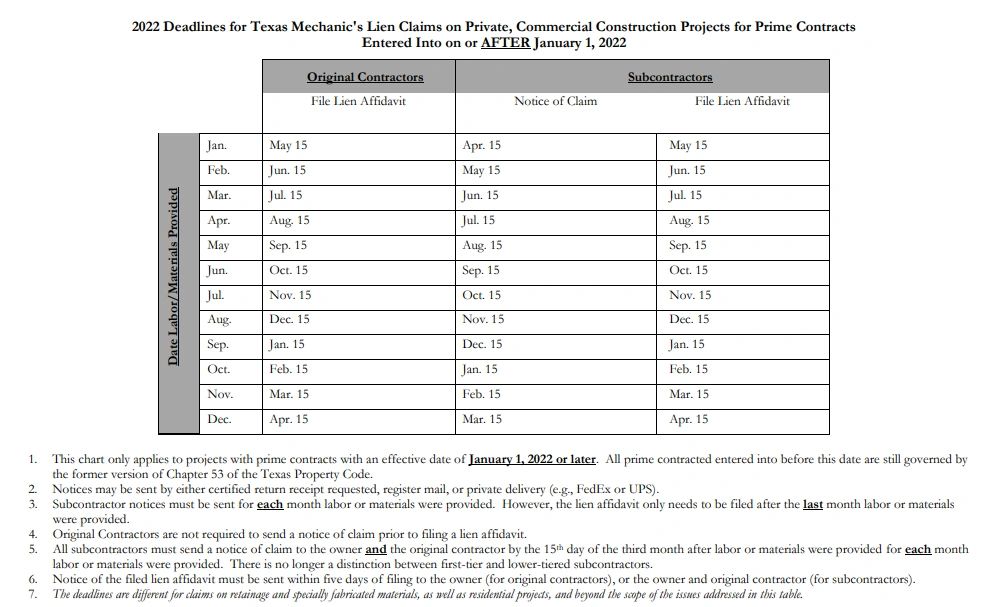
    Critical Deadlines for Filing: To protect your rights under mechanics and materialman’s liens, it is essential to understand the specific deadlines for filing in Texas. Failing to meet these deadlines may result in the loss of your lien rights. In 2022, the requirements and deadlines in Texas were tweaked by the legislature.  The following are examples of such changes:

    • Design professionals such as engineers and architects now have lien rights regardless of who they contract with.
    • Designs, drawings, plans, plats, surveys, and specifications done by design professionals are now categorically considered “improvements,” therefore they
      can be lienable.
    • Subcontractors and other lower-tier parties must no longer serve a second-month notice, though it is still best practice to serve such a notice. Subcontractors are also still required to serve the third-month notice on the 15th day of the third month after furnishing labor or materials.
    • All written notices must follow the format specified in the new statutory forms (see below for more details).
    • Deadlines that fall on a weekend or a legal holiday are now automatically extended to include the next day that is not a weekend or a legal holiday. Note that it is still best practice to fulfill deadlines sooner than the deadline.
    • All written notices may now be served via certified mail or via “any other form of traceable, private delivery, or mailing service that can confirm proof of receipt.”
    • A second month’s notice for specially fabricated materials is no longer required.
    • All mechanics liens, regardless of project type, will expire after 1 year following the last day when a lien could be filed. The claimant and the owner may reach an agreement for an extension and file such an agreement in the county clerk’s office.
    • Texas lien waivers no longer have to be notarized.

    The following is an example of a deadline:

    2022 Deadlines for TX Mechanic's Liens
    2022 Deadlines for TX Mechanic’s Liens

    Disclaimer: The laws surrounding Texas mechanic’s lien claims are complex and different from similar claims in other jurisdictions. This tool is not intended to provide legal advice. You should consult legal counsel with any questions. This tool is for informational purposes only 

  • Navigating Personal Injury Cases: Your Guide to Seeking Justice

    Navigating Personal Injury Cases: Your Guide to Seeking Justice

    If you or your loved one has experienced an unfortunate incident resulting in physical or emotional harm, it’s crucial to understand your rights and the legal recourse available to you. In this article, we’ll provide a comprehensive overview of personal injury cases in Texas, offering insights into key aspects of the process and highlighting the importance of having a dedicated attorney by your side.

    1. Understanding Personal Injury Law in Texas: Personal injury law encompasses a wide range of cases, including car accidents, slip and falls, medical malpractice, product liability, and more. In Texas, the legal system recognizes that victims deserve compensation for their injuries and losses caused by someone else’s negligence or wrongful actions.
    2. Determining Liability: One of the crucial elements in a personal injury case is establishing liability. Texas follows the modified comparative fault rule, which means that if the injured party is found to be partially responsible for the incident, their compensation may be reduced proportionally. The Woodlands Law Firm thoroughly investigates the circumstances, gathers evidence, and works with experts to establish liability, ensuring you receive the maximum compensation you deserve.*
    3. Seeking Medical Attention: After an accident, your health and well-being should be your top priority. Seeking immediate medical attention is crucial, not only for your well-being but also for documenting your injuries. Medical records serve as essential evidence in personal injury cases, supporting your claim for compensation.
    4. Statute of Limitations: In Texas, there is a time limit within which you must file a personal injury claim. This is known as the statute of limitations. Generally, the statute of limitations for personal injury cases is two years from the date of the incident. However, there are exceptions, such as cases involving minors or instances of medical malpractice. Consulting with a skilled attorney promptly is vital to ensure you do not miss the filing deadline.
    5. Calculating Damages: Personal injury claims aim to compensate victims for the damages they have suffered. Damages may include medical expenses, lost wages, pain and suffering, emotional distress, and loss of consortium. Understanding the full extent of your damages and accurately calculating them requires the expertise of an experienced personal injury attorney who can build a strong case on your behalf.
    6. Negotiating with Insurance Companies: Dealing with insurance companies can be a complex and overwhelming process. Insurance adjusters often try to minimize their payout or deny claims altogether. Having a skilled attorney on your side can level the playing field. The Woodlands Law Firm navigates the negotiation process, ensuring your rights are protected, and fights for a fair settlement that covers your losses adequately.
    7. Going to Trial: While many personal injury cases are resolved through settlements, some may require going to trial. The Woodlands Law Firm prepares meticulously for courtroom proceedings and presents a compelling case to the jury. The aim is to secure a favorable verdict that upholds your rights and provides the compensation you deserve.

    Conclusion: Navigating a personal injury case in Texas can be challenging without proper legal guidance. By understanding the intricacies of personal injury law, determining liability, seeking immediate medical attention, adhering to the statute of limitations, calculating damages accurately, and having an experienced attorney on your side, you can navigate the legal process with confidence. The Woodlands Law Firm is here to provide you with personalized attention, ensuring you receive the justice and compensation you deserve.

    Contact the Firm today for a consultation and let The Woodlands Law Firm fight for your rights.

    *As each case is unique, a law firm cannot guarantee results.

  • Mental Anguish Damages: Understanding Factors for Consideration

    Mental Anguish Damages: Understanding Factors for Consideration

    In personal injury cases, victims often experience not only physical pain but also mental anguish. Mental anguish refers to the emotional distress, suffering, and psychological harm that a person endures due to the negligence or intentional misconduct of another party. In Texas, determining the appropriate compensation for mental anguish damages involves considering various factors and examining relevant case law precedents.

    Factors for Consideration:

    When calculating mental anguish damages, Texas courts consider a range of factors to determine an appropriate compensation amount. While each case is unique, the following factors are commonly examined:

    1. 1. Severity and Duration: The severity and duration of the mental anguish experienced by the plaintiff play a significant role in determining damages. The courts and/or fact finder will consider the intensity and length of the emotional distress caused by the defendant’s actions.
    2. Impact on Daily Life: The extent to which mental anguish affects the plaintiff’s daily life is another crucial factor. The court may consider how the emotional distress has disrupted the plaintiff’s ability to work, enjoy hobbies, maintain relationships, or engage in other activities.
    3. Physical Manifestations: Evidence of physical symptoms or manifestations resulting from mental anguish can strengthen the case for damages. These may include sleep disturbances, loss of appetite, weight fluctuations, or the development of stress-related conditions.
    4. Professional Evaluation: Professional assessments, such as psychological evaluations, can provide objective evidence of mental anguish and its impact on the plaintiff. Expert testimony from mental health professionals may be instrumental in validating the claim.
    5. Pre-existing Conditions: Pre-existing mental health conditions, if any, should be taken into account when determining mental anguish damages. It is essential to establish the additional suffering caused by the defendant’s actions, separate from the plaintiff’s pre-existing condition.

    Relevant Case Law Precedents:

    To understand how mental anguish damages have been calculated in Texas, it is crucial to examine significant case law precedents. The following cases serve as important references:

    1. Parkway Co. v. Woodruff, 901 S.W.2d 434 (Tex. 1995): In this case, the Texas Supreme Court held that mental anguish damages must be reasonably proportionate to the plaintiff’s mental anguish. It emphasized the importance of considering the nature of the injury, the length of time the plaintiff experienced mental anguish, and the effect on their daily life.
    2. Saenz v. Fid. & Guar. Ins. Underwriters, 925 S.W.2d 607 (Tex. 1996): In this case, the Texas Supreme Court recognized that severe mental anguish can be compensable even in the absence of physical injury. It established that the nature, duration, and intensity of the anguish should guide the calculation of damages.

    Conclusion:

    Calculating mental anguish damages in Texas requires a careful examination of various factors and an understanding of relevant case law precedents. By considering the severity and duration of emotional distress, the impact on daily life, physical manifestations, professional evaluations, and pre-existing conditions, attorneys can build a strong case for their clients.

  • Texas DTPA: Your Consumer Shield

    Texas DTPA: Your Consumer Shield

    The Woodlands Law Firm is committed to protecting the rights of consumers in Texas. In this blog post, we will explore the Texas Deceptive Trade Practices Act (DTPA), a crucial piece of legislation designed to safeguard consumers from unfair and deceptive business practices. Whether you have been a victim of false advertising, fraudulent schemes, or any other form of consumer deception, understanding the DTPA can empower you to seek justice and hold unscrupulous businesses accountable.

    1. What is the Texas Deceptive Trade Practices Act (DTPA)? The Texas DTPA is a comprehensive consumer protection law that outlines prohibited acts and provides remedies for consumers who have been harmed by deceptive trade practices. It covers a wide range of commercial activities, including false advertising, misrepresentation, unconscionable acts, breaches of warranty, and more. The primary goal of the DTPA is to ensure fair and honest business practices and to provide consumers with avenues for seeking redress when they have been deceived or harmed.
    2. Prohibited Acts under the DTPA: The DTPA identifies specific acts and practices that are considered deceptive and are therefore prohibited. These include false representations, false advertising, bait-and-switch tactics, failure to disclose material information, and engaging in unfair or unconscionable practices. Understanding these prohibited acts can help consumers recognize when they have been victims of deceptive trade practices.
    3. Remedies Available to Consumers: The DTPA provides various remedies for consumers who have suffered harm due to deceptive trade practices. These remedies include actual damages, statutory damages, attorney’s fees, and injunctive relief. Moreover, in cases where the court finds that the defendant acted knowingly, additional treble damages may be awarded to the consumer. The availability of these remedies encourages consumers to assert their rights and seek compensation for the losses they have incurred.
    4. Elements of a DTPA Claim: To succeed in a DTPA claim, certain elements must be established. These typically include proving that the defendant engaged in a deceptive act, the consumer relied on the deceptive act, and the consumer suffered damages as a result. Understanding these elements is crucial when building a strong case to hold the responsible party accountable.
    5. Exceptions and Defenses: While the DTPA provides significant protection to consumers, there are certain exceptions and defenses available to defendants. For example, the DTPA does not apply to transactions between businesses or to certain professional services. Additionally, a defendant may argue that the consumer’s own actions contributed to the harm suffered. Consulting with an experienced consumer protection attorney is essential to navigate these complexities effectively.
    6. Seeking Legal Assistance: If you believe you have been a victim of deceptive trade practices in Texas, it is crucial to consult with a knowledgeable attorney who specializes in consumer protection law. A skilled attorney can evaluate your case, guide you through the legal process, and advocate on your behalf to help you obtain the compensation you deserve.

    Conclusion: The Texas Deceptive Trade Practices Act is a powerful tool that empowers consumers to fight back against unfair and deceptive business practices. By understanding the prohibited acts, available remedies, and the elements required for a successful claim, you can assert your rights and seek justice for the harm you have suffered. If you have been a victim of deceptive trade practices, don’t hesitate to contact The Woodlands Law Firm.

  • The Importance of Business Planning and Operating Agreements

    The Importance of Business Planning and Operating Agreements

    As a Texas attorney, I have witnessed firsthand the consequences that arise when businesses fail to implement proper planning structures. In this article, I will explore real-life examples of what can happen when there is no plan in place, emphasizing the significance of proactive business planning and the necessity of operating agreements.

    Chaos in Decision-Making: 

    Imagine a scenario where a business lacks a well-defined decision-making process. Disputes between partners or stakeholders can arise, leading to impasses and gridlocks. Without a plan in place, conflicts can escalate, potentially resulting in expensive litigation or even the dissolution of the business. A comprehensive operating agreement provides clear guidelines on how decisions should be made, preventing chaos and ensuring the smooth functioning of the business.

    Example: ABC Manufacturing Company In the absence of an operating agreement, the partners of ABC Manufacturing Company disagreed on key business decisions, such as expansion plans and capital investments. Unable to reach a consensus, the partners ended up filing lawsuits against each other, leading to a significant drain on financial resources and damaging the company’s reputation. Had they drafted a well-crafted operating agreement outlining decision-making procedures, this costly and disruptive dispute could have been avoided.

    Uncertainty Regarding Ownership and Management:

    Without a well-drafted operating agreement, questions can arise regarding the ownership and management structure of the business. This lack of clarity can create confusion, strained relationships, and potential power struggles among partners or members.

    Example: XYZ Consulting Firm XYZ Consulting Firm was formed by three friends who began their venture without an operating agreement. As the business grew, so did disagreements over profit sharing, management responsibilities, and the admission of new partners. The lack of a clear framework resulted in a breakdown of trust and ultimately led to one partner exiting the business. The remaining partners were left scrambling to define the new ownership structure, which caused unnecessary disruptions and hindered the firm’s growth potential.

    Insufficient Protection of Personal Assets:

    One of the primary advantages of operating agreements is their ability to shield owners’ personal assets from business liabilities. When no operating agreement is in place, business owners may find themselves personally liable for the debts and obligations of the company, putting their personal assets at risk.

    Example: DEF Construction Company DEF Construction Company operated as a general partnership without an operating agreement. When the company faced significant financial losses due to a failed project, the creditors pursued the personal assets of each partner to satisfy the debts. As a result, the partners faced financial ruin and had to liquidate their personal assets, including homes and savings, to settle the company’s obligations. A well-structured operating agreement with appropriate liability protections could have prevented this devastating outcome.

    Conclusion: 

    The examples discussed above highlight the perils businesses can face when they neglect the importance of business planning and operating agreements. By taking proactive measures to draft a comprehensive operating agreement, businesses can establish clear guidelines for decision-making, define ownership and management structures, and protect personal assets. Engaging the services of a knowledgeable attorney during the business planning process can help ensure that your business avoids the potential pitfalls that arise when there is no plan in place. Remember, it is never too early to start planning, but it can be too late.  Contact The Woodlands Law Firm for a Consultation today.