Category: Deceptive Trade Practices Act

  • Understanding Your Consumer Rights: Fair Debt Collection Practice

    Understanding Your Consumer Rights: Fair Debt Collection Practice

    Dealing with debt collectors can be a stressful experience for consumers. Fortunately, the Fair Debt Collection Practices Act (FDCPA) is a crucial federal law that protects consumers from abusive and unfair debt collection practices.

    Under the FDCPA, consumers have specific rights, and debt collectors are bound by certain prohibitions to ensure fair treatment during the debt collection process. This blog post aims to explain the consumer rights granted by the FDCPA and highlight the prohibited acts by debt collectors as outlined in 12 CFR Part 1006 – Fair Debt Collection Practices Act (Regulation F).


     Consumer Rights under the Fair Debt Collection Practices Act

    1. Right to Validation of Debt (§ 1006.30)

    When a debt collector contacts a consumer about an alleged debt, the consumer has the right to request validation of the debt. Validation includes providing written verification of the debt’s existence and the amount owed. This request must be made within 30 days of receiving the initial communication from the debt collector. Once the request is received, the debt collector must cease collection efforts until they have provided the necessary validation.

    2. Right to Dispute the Debt (§ 1006.32)

    Consumers have the right to dispute the debt’s validity if they believe it is inaccurate or if they don’t owe the debt at all. Upon receiving a dispute, the debt collector must cease collection efforts until they have conducted a reasonable investigation and provided the consumer with verification of the debt.

    3. Right to Cease Communication (§ 1006.6)

    Consumers have the right to request that a debt collector cease communication regarding the debt. This request can be made in writing, and once received, the debt collector can only contact the consumer to acknowledge receipt of the request or inform them of further legal actions. However, this does not relieve the consumer of their obligation to pay the debt if it is valid.


    Prohibited Acts by Debt Collectors under the FDCPA

    1. Harassment or Abuse (§ 1006.30(b))

    Debt collectors are prohibited from engaging in any conduct that harasses, oppresses, or abuses the consumer. This includes using threats of violence, using obscene or profane language, or repeatedly calling with the intention of annoying or harassing the consumer.

    2.  False or Misleading Representations (§ 1006.30(e))

    Debt collectors are not allowed to use false, deceptive, or misleading representations in their communication with consumers. This includes misrepresenting the amount owed, misrepresenting themselves as attorneys or government representatives, or providing false information about the consequences of not paying the debt.

    3. Unfair Practices (§ 1006.30(f))

    Debt collectors must not engage in unfair practices when attempting to collect a debt. This includes adding unauthorized charges or fees to the debt, depositing post-dated checks prematurely, or threatening to seize property without the legal authority to do so.

    4.  Contacting Consumers at Inconvenient Times (§ 1006.30(c))

    Debt collectors are restricted from contacting consumers at inconvenient times, such as before 8:00 AM or after 9:00 PM, unless the consumer has given explicit permission to do so.

    Conclusion

    The Fair Debt Collection Practices Act (FDCPA) serves as a critical shield for consumers against abusive and unfair debt collection practices. Understanding your rights under the FDCPA is essential to protecting yourself from unscrupulous debt collectors. Remember, if you believe a debt collector has violated the FDCPA, you have the right to file a complaint with the Consumer Financial Protection Bureau (CFPB) or seek legal counsel to enforce your rights.

    (Note: The content of this blog post is based on the FDCPA and 12 CFR Part 1006 as of September 2021. Always ensure to check for any updates or amendments to the law after this date.)


  • Companies Remain Liable for Deceptive Acts, Despite Disclaimers

    Companies Remain Liable for Deceptive Acts, Despite Disclaimers

    In the world of business, contracts play a crucial role in establishing the rights and obligations of parties involved. However, it’s important to note that contractual agreements cannot shield companies from liability for engaging in deceptive trade practices. Under the Texas Deceptive Trade Practices Act (DTPA), companies can still be held accountable for their deceptive acts, irrespective of any liability disclaimers within a contract. Let’s explore this topic further and shed light on the implications for businesses operating in Texas.

    Understanding the Texas Deceptive Trade Practices Act:

    The Texas Deceptive Trade Practices Act is a state law designed to protect consumers from unfair and deceptive business practices. Enacted in 1973, the DTPA covers a wide range of deceptive acts, including false advertising, fraud, misleading representations, and more. Its primary goal is to promote fair competition, protect consumers, and provide remedies for those harmed by deceptive practices.

    Liability Disclaimers in Contracts: 

    Contracts often contain clauses that attempt to limit or disclaim liability for certain actions or damages. These clauses, known as liability disclaimers or exculpatory clauses, are included to protect businesses from potential legal claims and financial liability. However, it is essential to understand that such disclaimers do not provide absolute immunity from liability under the Texas DTPA.

    The Limitations of Liability Disclaimers Under the DTPA:

     The Texas DTPA is a powerful consumer protection law that takes precedence over contractual provisions attempting to disclaim liability for deceptive acts. The Act explicitly states that any waiver or limitation of a consumer’s rights under the DTPA is void and unenforceable. This means that even if a contract includes a liability disclaimer, it does not absolve a company from liability for engaging in deceptive trade practices.

    Exceptions to Liability Disclaimers: 

    While the DTPA restricts the effectiveness of liability disclaimers, there are some exceptions where they may still be valid. For instance, if the parties involved are both business entities and the transaction does not involve personal, family, or household goods or services, the DTPA may not apply. However, it’s important to consult with an experienced attorney to determine whether an exception applies in a specific situation.

    Legal Consequences of Deceptive Trade Practices:

    If a company is found to have engaged in deceptive trade practices, it can face severe legal consequences. The DTPA allows consumers to seek various remedies, including actual damages, treble damages (three times the amount of actual damages if the court finds the company acted knowingly or intentionally), and attorney’s fees. Moreover, the Texas Attorney General can take legal action against businesses violating the DTPA, leading to civil penalties and injunctive relief.

    Conclusion:

    Companies operating in Texas must be aware that contractual liability disclaimers do not absolve them from liability for deceptive trade practices under the Texas Deceptive Trade Practices Act. The DTPA remains a robust law aimed at safeguarding consumers and promoting fair competition. To ensure compliance and minimize legal risks, businesses should prioritize transparency, honesty, and ethical practices in their dealings with consumers. Consulting with an experienced Texas attorney is essential to navigate the complexities of the DTPA and protect the company’s interests.

  • Mechanics and Materialman’s Liens

    Mechanics and Materialman’s Liens

    As a Texas attorney, I often come across clients who face challenges in securing payment for their work or materials supplied in construction projects. In such cases, mechanics and materialman’s liens can be powerful legal tools to protect the rights of contractors, subcontractors, suppliers, and other construction industry professionals.

    However, it is crucial to understand the deadlines associated with filing these liens to ensure their effectiveness. In this blog post, we will explore the basics of mechanics and materialman’s liens in Texas and shed light on the critical filing deadlines.

    What are mechanics’ and materialman’s liens? Mechanics and materialman’s liens are legal remedies available to individuals or businesses involved in the construction industry to secure payment for labor, services, or materials provided in the improvement of a property. These liens essentially create a claim against the property, allowing the claimant to seek payment from the property owner.

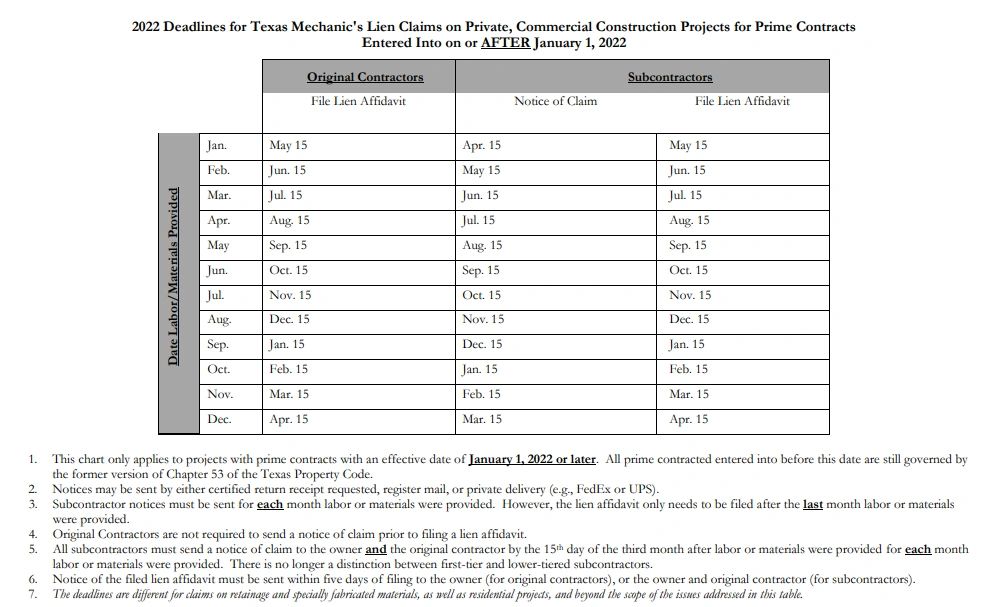
    Critical Deadlines for Filing: To protect your rights under mechanics and materialman’s liens, it is essential to understand the specific deadlines for filing in Texas. Failing to meet these deadlines may result in the loss of your lien rights. In 2022, the requirements and deadlines in Texas were tweaked by the legislature.  The following are examples of such changes:

    • Design professionals such as engineers and architects now have lien rights regardless of who they contract with.
    • Designs, drawings, plans, plats, surveys, and specifications done by design professionals are now categorically considered “improvements,” therefore they
      can be lienable.
    • Subcontractors and other lower-tier parties must no longer serve a second-month notice, though it is still best practice to serve such a notice. Subcontractors are also still required to serve the third-month notice on the 15th day of the third month after furnishing labor or materials.
    • All written notices must follow the format specified in the new statutory forms (see below for more details).
    • Deadlines that fall on a weekend or a legal holiday are now automatically extended to include the next day that is not a weekend or a legal holiday. Note that it is still best practice to fulfill deadlines sooner than the deadline.
    • All written notices may now be served via certified mail or via “any other form of traceable, private delivery, or mailing service that can confirm proof of receipt.”
    • A second month’s notice for specially fabricated materials is no longer required.
    • All mechanics liens, regardless of project type, will expire after 1 year following the last day when a lien could be filed. The claimant and the owner may reach an agreement for an extension and file such an agreement in the county clerk’s office.
    • Texas lien waivers no longer have to be notarized.

    The following is an example of a deadline:

    2022 Deadlines for TX Mechanic's Liens
    2022 Deadlines for TX Mechanic’s Liens

    Disclaimer: The laws surrounding Texas mechanic’s lien claims are complex and different from similar claims in other jurisdictions. This tool is not intended to provide legal advice. You should consult legal counsel with any questions. This tool is for informational purposes only 

  • Texas DTPA: Your Consumer Shield

    Texas DTPA: Your Consumer Shield

    The Woodlands Law Firm is committed to protecting the rights of consumers in Texas. In this blog post, we will explore the Texas Deceptive Trade Practices Act (DTPA), a crucial piece of legislation designed to safeguard consumers from unfair and deceptive business practices. Whether you have been a victim of false advertising, fraudulent schemes, or any other form of consumer deception, understanding the DTPA can empower you to seek justice and hold unscrupulous businesses accountable.

    1. What is the Texas Deceptive Trade Practices Act (DTPA)? The Texas DTPA is a comprehensive consumer protection law that outlines prohibited acts and provides remedies for consumers who have been harmed by deceptive trade practices. It covers a wide range of commercial activities, including false advertising, misrepresentation, unconscionable acts, breaches of warranty, and more. The primary goal of the DTPA is to ensure fair and honest business practices and to provide consumers with avenues for seeking redress when they have been deceived or harmed.
    2. Prohibited Acts under the DTPA: The DTPA identifies specific acts and practices that are considered deceptive and are therefore prohibited. These include false representations, false advertising, bait-and-switch tactics, failure to disclose material information, and engaging in unfair or unconscionable practices. Understanding these prohibited acts can help consumers recognize when they have been victims of deceptive trade practices.
    3. Remedies Available to Consumers: The DTPA provides various remedies for consumers who have suffered harm due to deceptive trade practices. These remedies include actual damages, statutory damages, attorney’s fees, and injunctive relief. Moreover, in cases where the court finds that the defendant acted knowingly, additional treble damages may be awarded to the consumer. The availability of these remedies encourages consumers to assert their rights and seek compensation for the losses they have incurred.
    4. Elements of a DTPA Claim: To succeed in a DTPA claim, certain elements must be established. These typically include proving that the defendant engaged in a deceptive act, the consumer relied on the deceptive act, and the consumer suffered damages as a result. Understanding these elements is crucial when building a strong case to hold the responsible party accountable.
    5. Exceptions and Defenses: While the DTPA provides significant protection to consumers, there are certain exceptions and defenses available to defendants. For example, the DTPA does not apply to transactions between businesses or to certain professional services. Additionally, a defendant may argue that the consumer’s own actions contributed to the harm suffered. Consulting with an experienced consumer protection attorney is essential to navigate these complexities effectively.
    6. Seeking Legal Assistance: If you believe you have been a victim of deceptive trade practices in Texas, it is crucial to consult with a knowledgeable attorney who specializes in consumer protection law. A skilled attorney can evaluate your case, guide you through the legal process, and advocate on your behalf to help you obtain the compensation you deserve.

    Conclusion: The Texas Deceptive Trade Practices Act is a powerful tool that empowers consumers to fight back against unfair and deceptive business practices. By understanding the prohibited acts, available remedies, and the elements required for a successful claim, you can assert your rights and seek justice for the harm you have suffered. If you have been a victim of deceptive trade practices, don’t hesitate to contact The Woodlands Law Firm.